Why We Always Add a Moisture Vapor Barrier on Below-Grade Steps
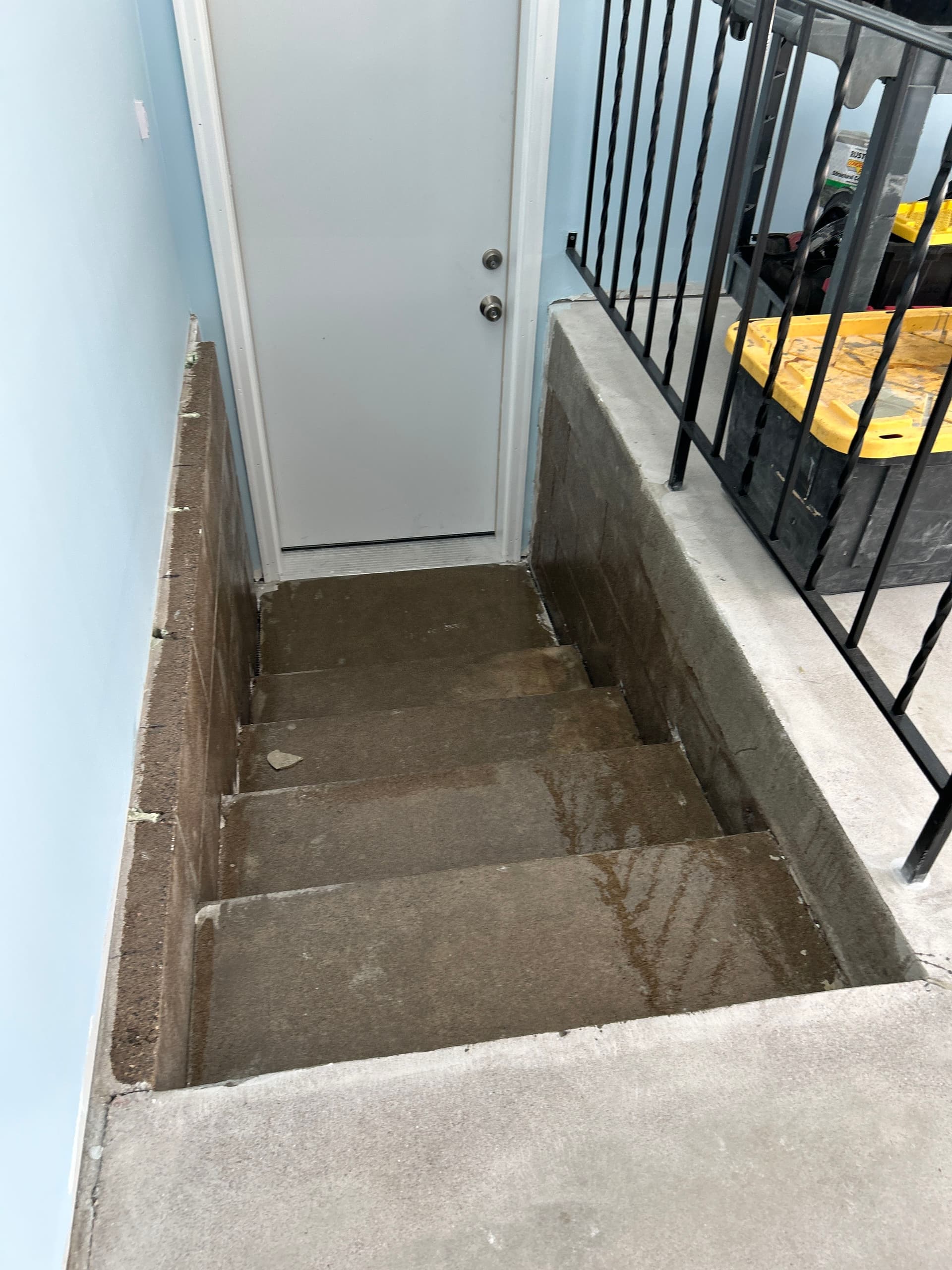
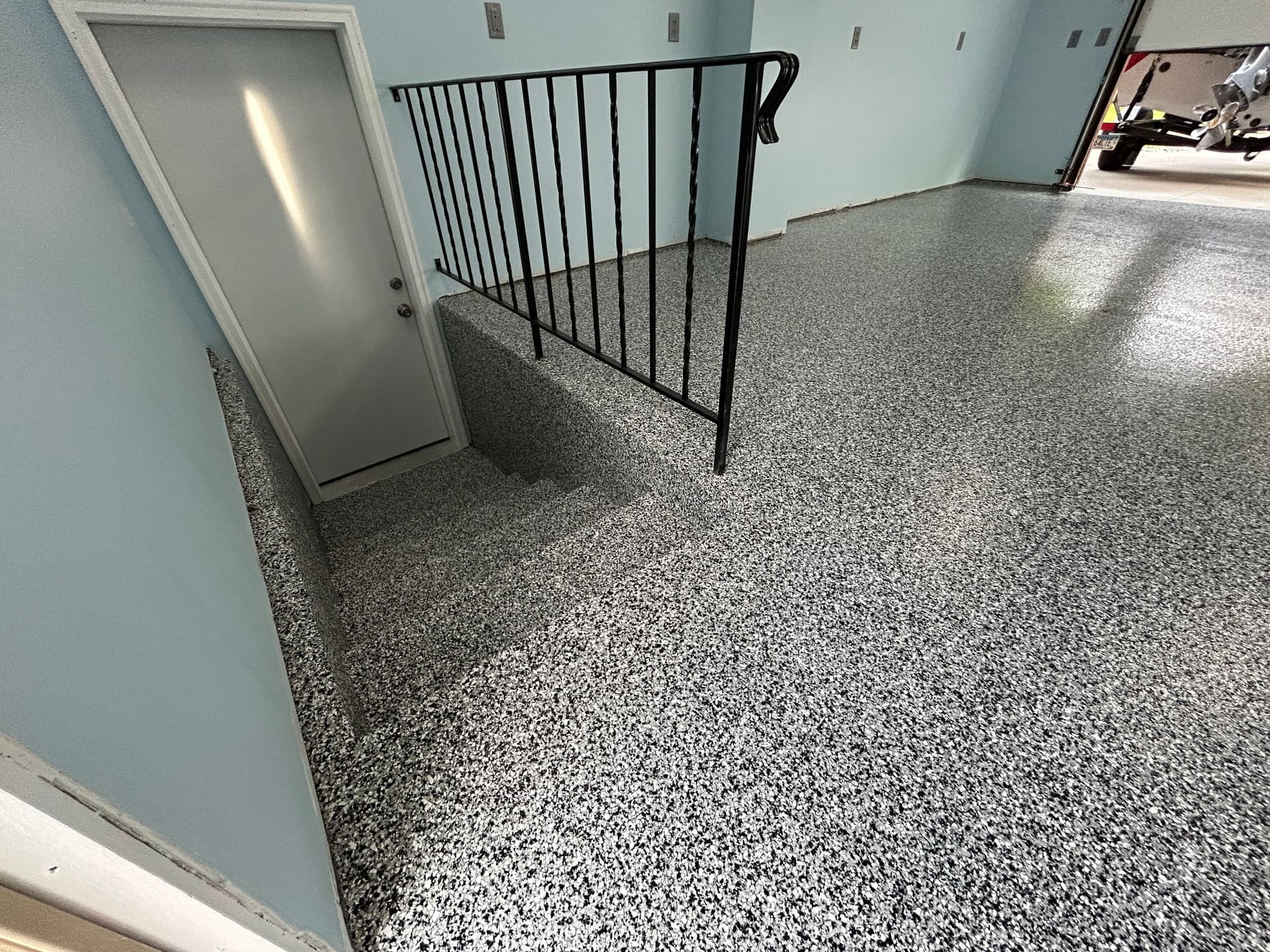
Basement entries and below-grade steps are tricky. Moisture migrates up through concrete that sits below ground level, and if you skip the vapor barrier step, that moisture will eventually push up against your coating from underneath - causing it to bubble, peel, and fail way ahead of schedule.
That's exactly why we don't skip it. Before we laid down a single ounce of epoxy on this basement entry, we applied a moisture vapor barrier to the concrete first. It's not glamorous work. No one brags about a vapor barrier. But it's the step that determines whether this floor looks great five years from now or starts peeling within a year.
Once the barrier was down, we went with a full flake epoxy and polyaspartic system - the same approach we use on garage floors and interior slabs. The full broadcast flake gives the surface texture and grip, which matters a lot on steps where footing is important. The polyaspartic topcoat seals everything in, handles heavy foot traffic, and gives the finish that clean, polished look you can see carrying across the entire floor and down the staircase.
What we ended up with is a surface that's consistent, durable, and actually built to last in a below-grade environment. A lot of people get quotes and nobody mentions the moisture issue until the floor fails. We'd rather handle it upfront and do the job right the first time.